
SIRMAC
About Sirmac
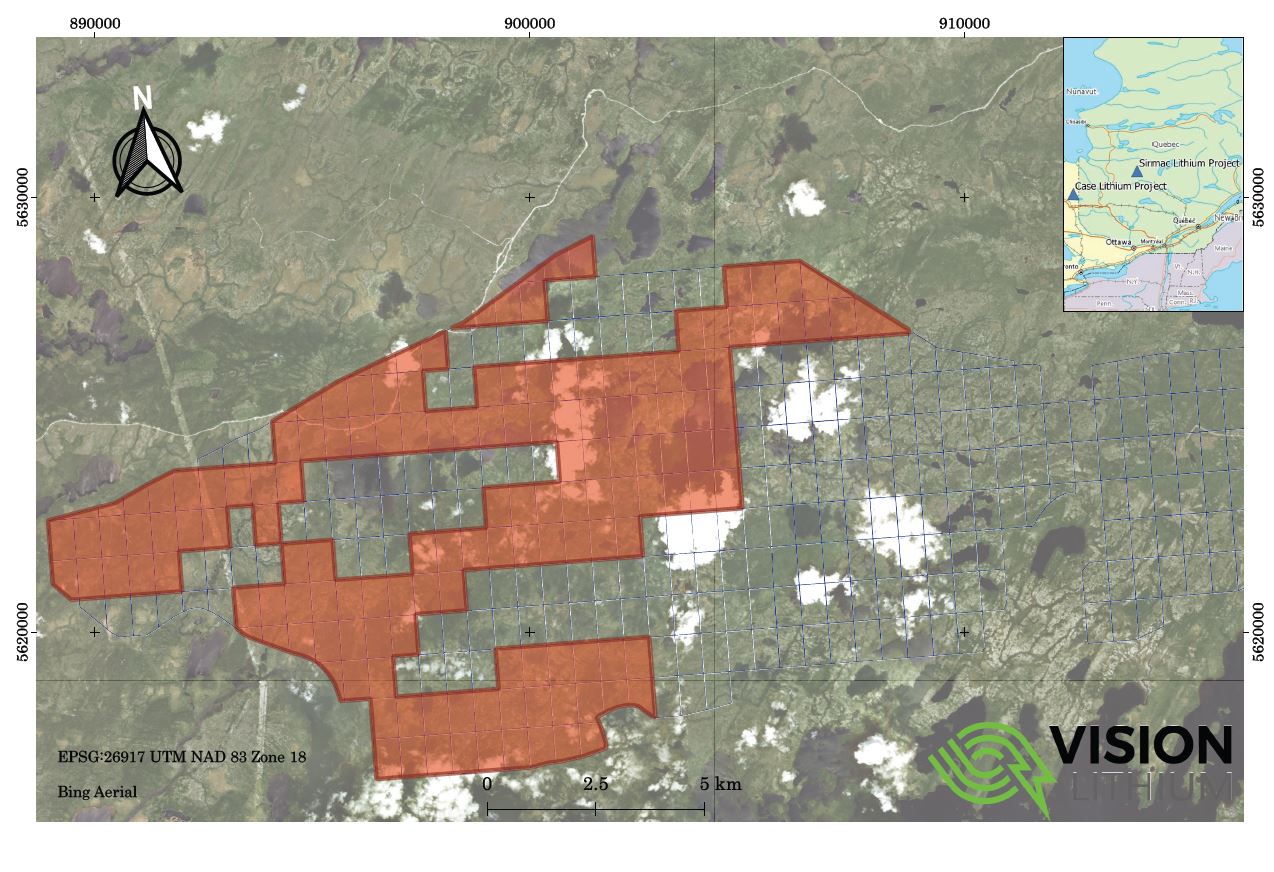
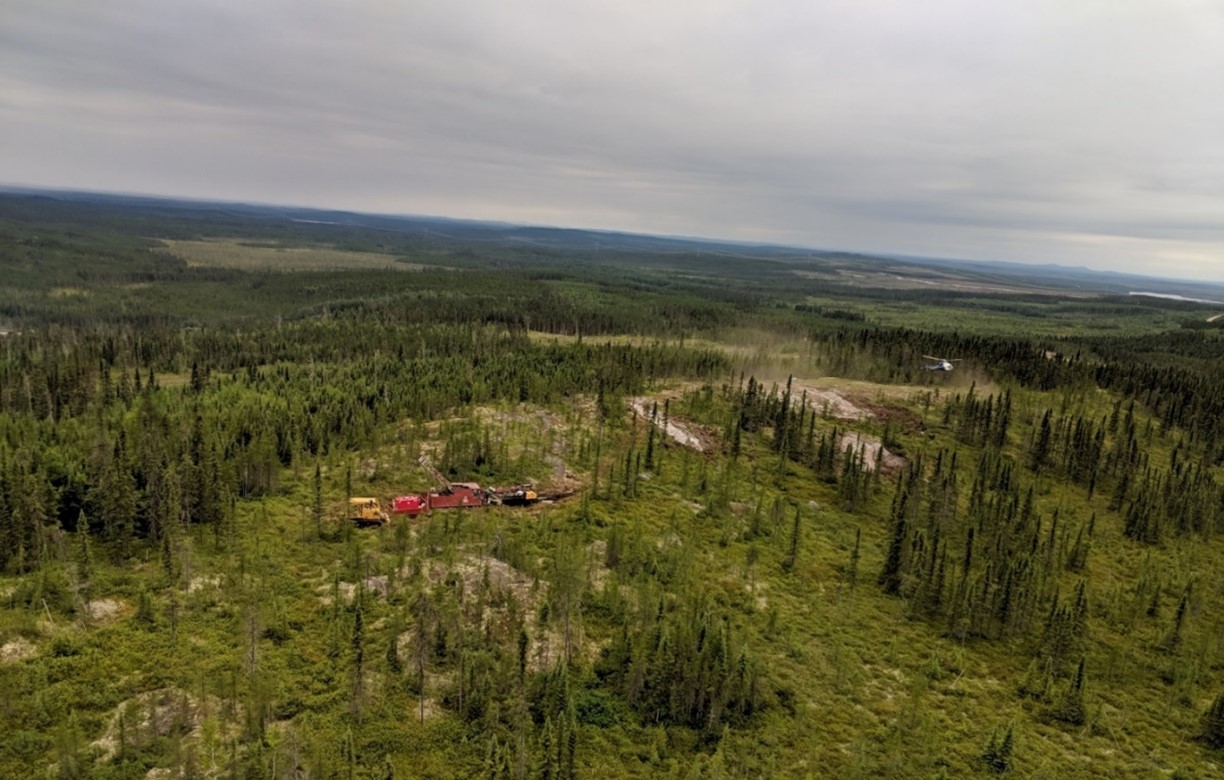
The Sirmac Property consists of 155 mining claims (7,750 hectares) located about 180km NW of Chibougamau, in the Plan Nord Territory of the province of Québec.
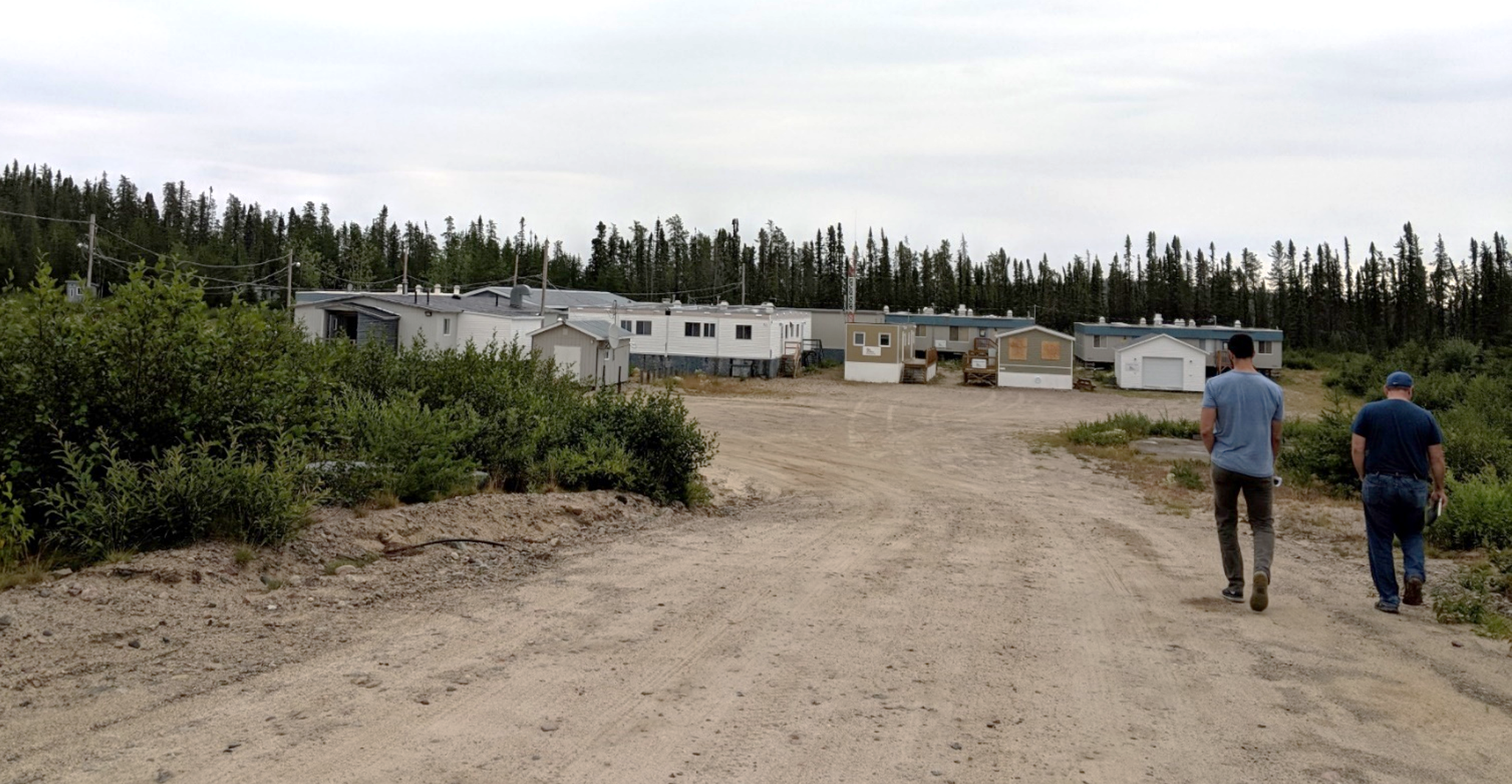
A main forestry road passes near the property and vehicles can reach the main mineral occurrences on the property using secondary logging roads. In addition, a 700 kV power line runs through the property.
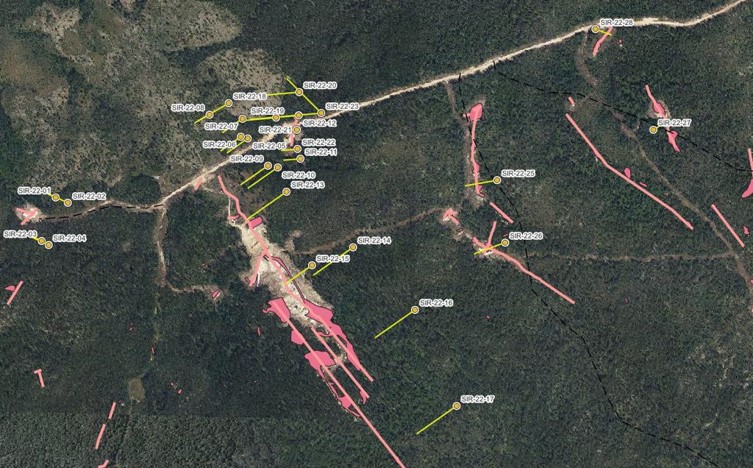
Nemaska Lithium completed more than $2 million of exploration work on the Sirmac Property consisting of 72 shallow drill holes (3,415m) and extensive trenching and channel sampling of the #5 Dike.
Vision Lithium completed ~3,500-metre drill program in the summer of 2022.
Acquisition
On December 14, 2017, Vision Lithium announced the signing of a definitive asset purchase agreement for a 100% undivided interest in the Sirmac Lithium Property from Nemaska Lithium Inc. Vision Lithium issued $250,000 cash payment and 15,000,000 common shares of Vision Lithium to Nemaska Lithium. Vision Lithium also assumed a pre-existing 1% Net Smelter Return (NSR) on certain claims comprising the Sirmac Property.
Claims and Location
- Vision Lithium has drilled and channel sampled the #5 Zone as well as discovered the East Zone
- Numerous other large dikes on the property represent other exploration targets and growth potential at Sirmac
- Vision will submit a bulk sample permit application for Sirmac
Excellent Infrastructure
- Lodging, Road Access, etc.
Geology
The Sirmac property is located in the North-East part of the Superior geological province, in the Frotet-Evans volcano-sedimentary belt. Four types of rocks outcrop on the Sirmac property: quartz-biotite-hornblende schists, amphibolitized flows or mafic sills, syenite pluton, and pegmatites, some of which are spodumene-bearing. The main foliation strikes E-W and has a steep dip. More than twelve granitic pegmatite dikes, whose thickness ranges from 1 to 100 m, have been identified. All of these cut the host schists and generally strike NNW-SSE (315°/350°), with an apparent sub-vertical dip and steep contacts with host rocks.
Mineralization
The type of deposit associated with the lithium mineralization of the Sirmac property is a granitic, rare element-bearing pegmatite due to the presence of spodumene. In dike #5—the known deposit—spodumene crystals are euhedral, with color and size varying from white to greenish- or grayish-white and from 1 to 30 cm in size, with an average size of 10 cm. The amount of spodumene found in the pegmatite ranges from 5 to 30% in volume. In general, the crystals are slightly altered and frequently contain rounded inclusions of quartz. A historical resource estimate was performed on the deposit by Wrightbar Mines Ltd. in 1994, with results indicating a total of 314,328 tonnes grading 2.04% Li2O.
Dike #5
Drill Program (Dike #5)
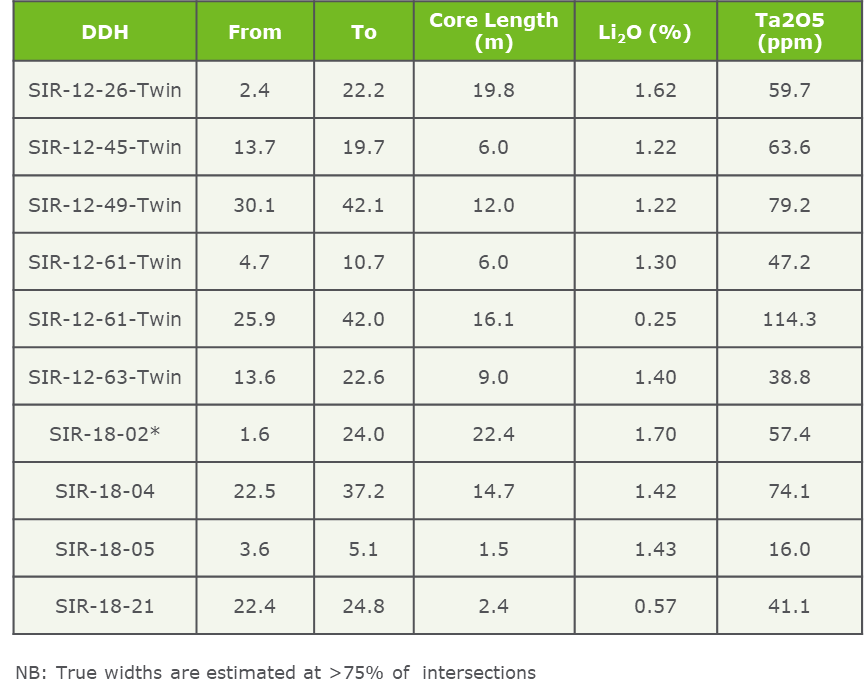
See Vision Lithium Inc., Press Release (July 19, 2018) for further information on the nature and context of the results.
Dike #5 – Bulk Sample
- Dike #5 is an excellent target for up to a 50,000 tonne bulk sample, application was submitted in November 2022
- A “mountain of lithium” which would be amenable to bulk sample in a quarry operation
- Bulk sample will provide ample material for testing mining methods and lithium concentrate processing, additional metallurgy and customer(s) evaluation
- Looking to sign multiple mineral sales agreements with end users
- Will significantly de-risk project for future mining at full scale operations
Sirmac – East Zone
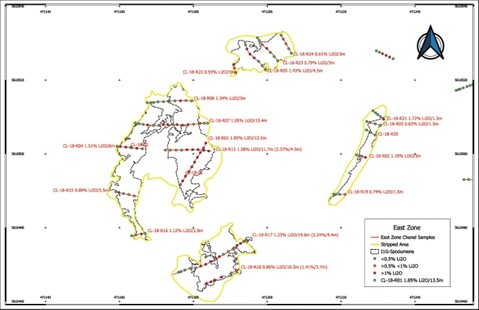
- Located about 5 km from Dike #5
- Zone appears to be several hundred metres in length and hosts widespread spodumene crystals
- Excellent additional exploration target
- The property hosts a dozen pegmatite dikes, likely more, most of which have never been tested by drilling
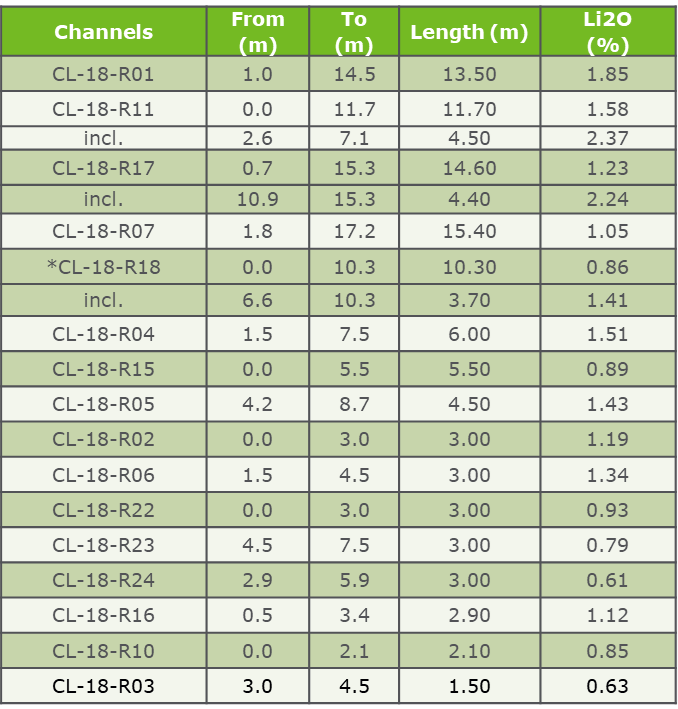
East Zone – 2018 Channel Sampling
Historical Resource Estimate
In 2012, Nemaska Lithium conducted a successful exploration campaign. In total, 9 sites were mechanically stripped for a surface area of approximately 13,000 m2. There were 29 channels completed over 739 metres for a total of 506 samples (selected results below, for full results see the Nemaska Lithium news release dated November 5, 2012).
Also as part of the same exploration program, Nemaska Lithium completed a diamond drill campaign of 72 shallow drill holes (3,414.5 m). A total of 1,953 samples, including quality control samples (13%), were sent to the lab for assay (selected results below, for full results see the Nemaska Lithium news release dated November 13, 2012).
Drill results from this program reported multiple intersections over 2% Li2O. More specifically, Nemaska Lithium intersected mineralization of up to 2.98% Li2O. This grade approaches the grade found at the Greenbushes deposit, which is the highest grade hard rock lithium deposit in the world.
2023 NI-43-101 Mineral Resources
Mineral Resources for Sirmac Project with 0.50% Li2O Cut-Off Grade (2023):
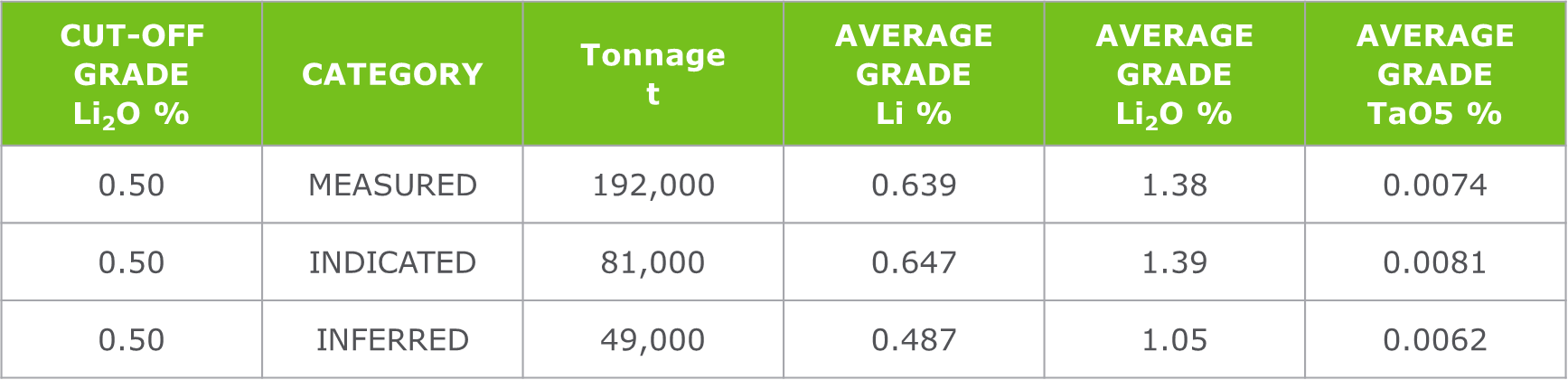
Notes: The mineral resource estimate has been calculated using the Canadian Institute of Mining, Metallurgy and Petroleum (CIM) Definitions Standards for mineral resources in accordance with NI 43-101. Mineral resources which are not mineral reserves do not have demonstrated economic viability. Inferred mineral resources are exclusive of the measured and indicated resources.
Vision Lithium Makes 99.99% Pure Lithium Carbonate
Diagram of lithium carbonate production

Outcrop samples and drill core samples from the 2012 and 2018 drilling programs on the main #5 dike were sent to the Lakefield laboratory of SGS Canada Inc. for a Preliminary Economic Assessment (PEA) level metallurgical test work program. The samples were combined into one Main Composite, one High Grade Composite, and three variability samples, based on instructions provided by the Company. The metallurgical test work program included sample preparation, mineralogical analysis, grindability, magnetic separation, heavy liquid separation (HLS), dense media separation (DMS), and flotation testing.
High-grade lithium carbonate production methodology
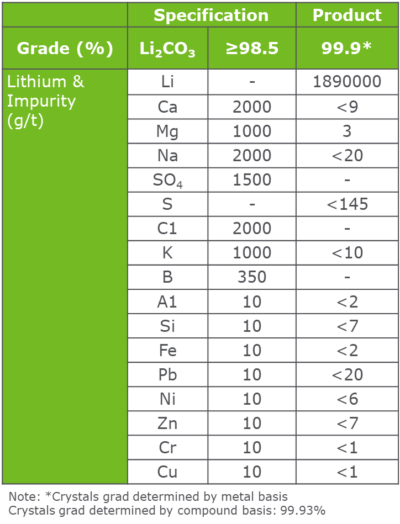
To produce high-grade lithium carbonate, the combined pregnant leach solution (PLS) from the water leach tests (WL-1 to WL-5) was first purified by primary and secondary impurity removal steps. Further purification to >99.5% was performed by ion-exchange (IX) followed by lithium carbonate precipitation. Finally, bicarbonate polishing was conducted to achieve battery-grade purity of >99.9%.
Source: Spodumene Beneficiation And Lithium Extraction From A Sample Taken From The Sirmac Lithium Property, by bylina, M. Gladkovas, J. Brown, *M. Aghamirian and S. Ali SGS canada inc. 185 concession street, lakefield, ON, canada K0L 2H0
Lithium Carbonate Final Grade Specifications
South Sirmac area
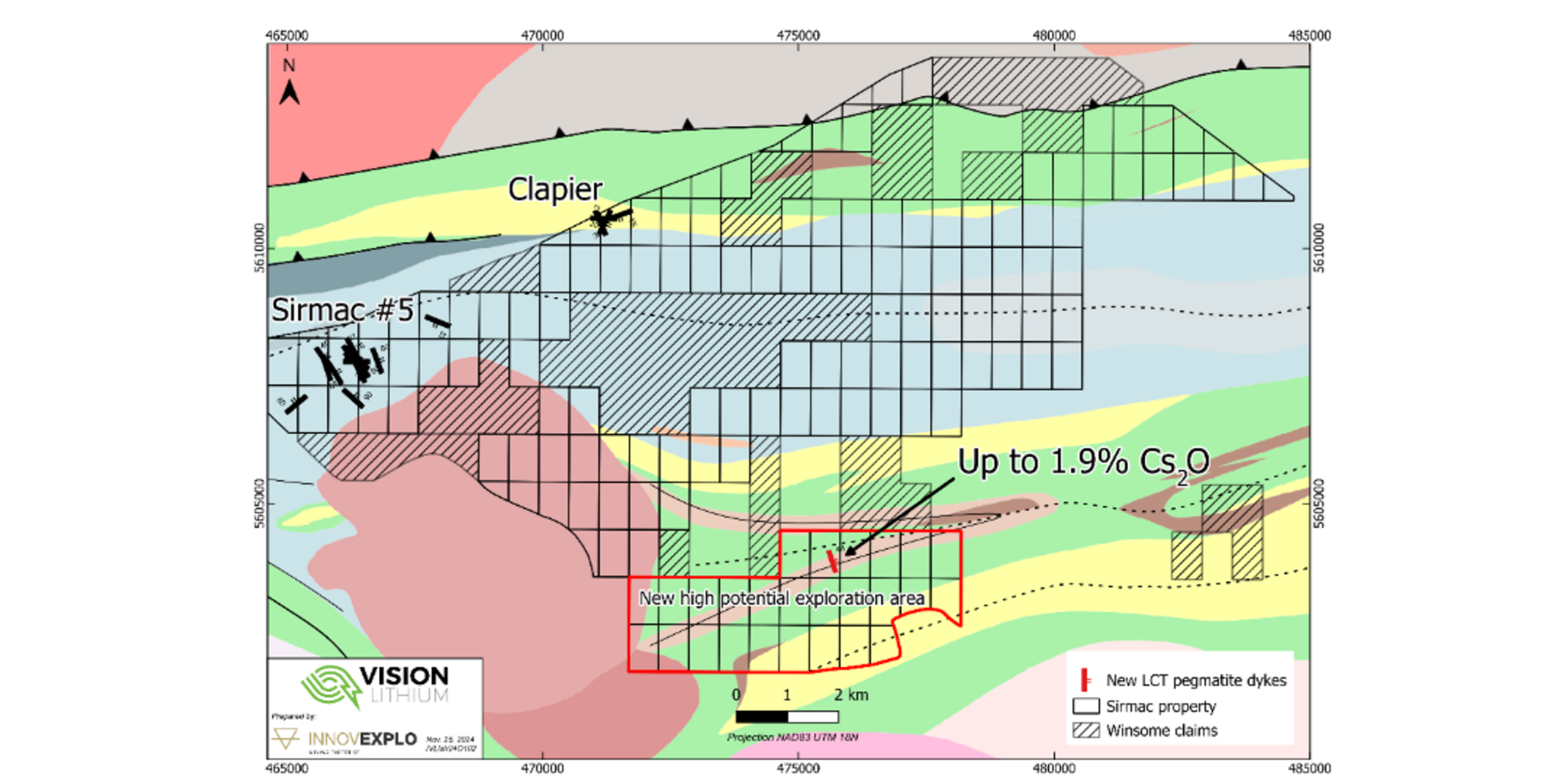
In late 2024, a new area of mineralized pegmatites was discovered in the southern portion of Vision Lithium’s Sirmac property, approximately 10 km SE of the #5 Dike. A single visit to the area led to the discovery of two pegmatite dikes in contact with basalts. The dikes outcrop minimally, and their size and extent are not currently known. However, spodumene was observed in both dikes and representative samples of pegmatite and the host rock basalt were taken from each site with the following results:
Sirmac property with location of 2024 discovery
|
Grab
Sample
|
Cesium
ppm |
Cs2O*
% |
Lithium
ppm |
Li2O*
% |
Tantalum
ppm |
Rubidium
ppm |
|
Pegmatite
1 |
13,150 | 1.39 | 3,230 | 0.695 | 201 | 6,010 |
|
Pegmatite
1 |
18,300 | 1.94 | 860 | 0.185 | 264 | 4,610 |
|
Basalt
1 |
179 | 0.02 | 410 | 0.088 | 1 | 99 |
|
Pegmatite
2 |
8,410 | 0.89 | 2,880 | 0.620 | 257 | 5,370 |
|
Basalt
2 |
1,320 | 0.14 | 1,290 | 0.278 | 1 | 961 |
Note: Cs2O% = (Cs ppm/10 000) *1.06; Li2O% = (Li ppm/10 000) *2.153
Yves Rougerie, President & CEO comments: “The very high-grade cesium results suggest these dikes are highly fractionated LCT (lithium-cesium-tantalum) pegmatites with the potential of hosting economic cesium mineralization. Although not observed, the mineral pollucite, the principal mineral of cesium, is likely present. These cesium assay results are amongst the highest ever reported in the province of Québec. The provincial database of surface rock samples contains over 80,000 cesium assay results of which only one result is above 1% and less than ten are above 800ppm (ref SIGÉOM).”
The dikes also exhibit highly anomalous values for lithium, tantalum and rubidium. These results are similar in many respects to values reported from the producing Tanco mine in Manitoba and the Case Lake exploration project in eastern Ontario, the two most significant cesium occurrences in Canada.
The highly anomalous values in the basalt samples for cesium and lithium indicate a strong alteration halo surrounding the pegmatite dikes. This suggests the dikes are potentially larger/wider at depth and/or along strike.
The exploration program was coordinated with Innovexplo of Val d’Or, Québec who contributed new interpretations of existing geological models for the property occurrences earlier in the year followed by field work that included outcrop visits and systematic structural measurements and a reinterpretation of pegmatite textures from drill core relogging (mainly from Dike #5). Proposals for new exploration concepts and targets resulted from this work. The new area discovery is also the result of this coordinated effort. Decades-old historical drilling for base metals in the southern area intersected pegmatite dikes which were not sampled at the time. Other dikes are likely present under overburden cover in the vicinity of the new dikes. A whole new corridor/swarm of LCT pegmatite dikes is possible in this area, fertile for both cesium and/or lithium-tantalum economic deposits. Future exploration will focus on this area for this obvious potential.
2025 Field Program
A follow-up field program was planned through the winter, and a 4-man team of geologists and technicians visited the property in May 2025. Several new LCT dike discoveries suggest the existence of a major east-northeast mineralized trend which hosts multiple lithium, cesium and tantalum-rich LCT dikes, and likely includes the Winsome SC occurrence. Vision’s claims cover over 5 km of this trend and new claims staked by Vision east of Elevra/Sayona’s Gariteau claim block could also cover the trend. Isolated mineralized LCT pegmatite outcrops and historical drill-intersected dikes on Vision’s claims are further indications of the potential for discovery along this new trend. The area is generally low relief, overburden covered and may host concealed major dikes near to very-near surface. The similarity between all the dikes discovered to date and the high grades encountered are very positive for this Project going forward.
Follow-up work will likely include additional prospecting and sampling, soil sampling, renewed magnetic surveys, targeted gravity surveys and drilling. We are excited and looking forward to advancing this excellent Project.”
Assinica LCT Pegmatite Trend with location of new dike discoveries.
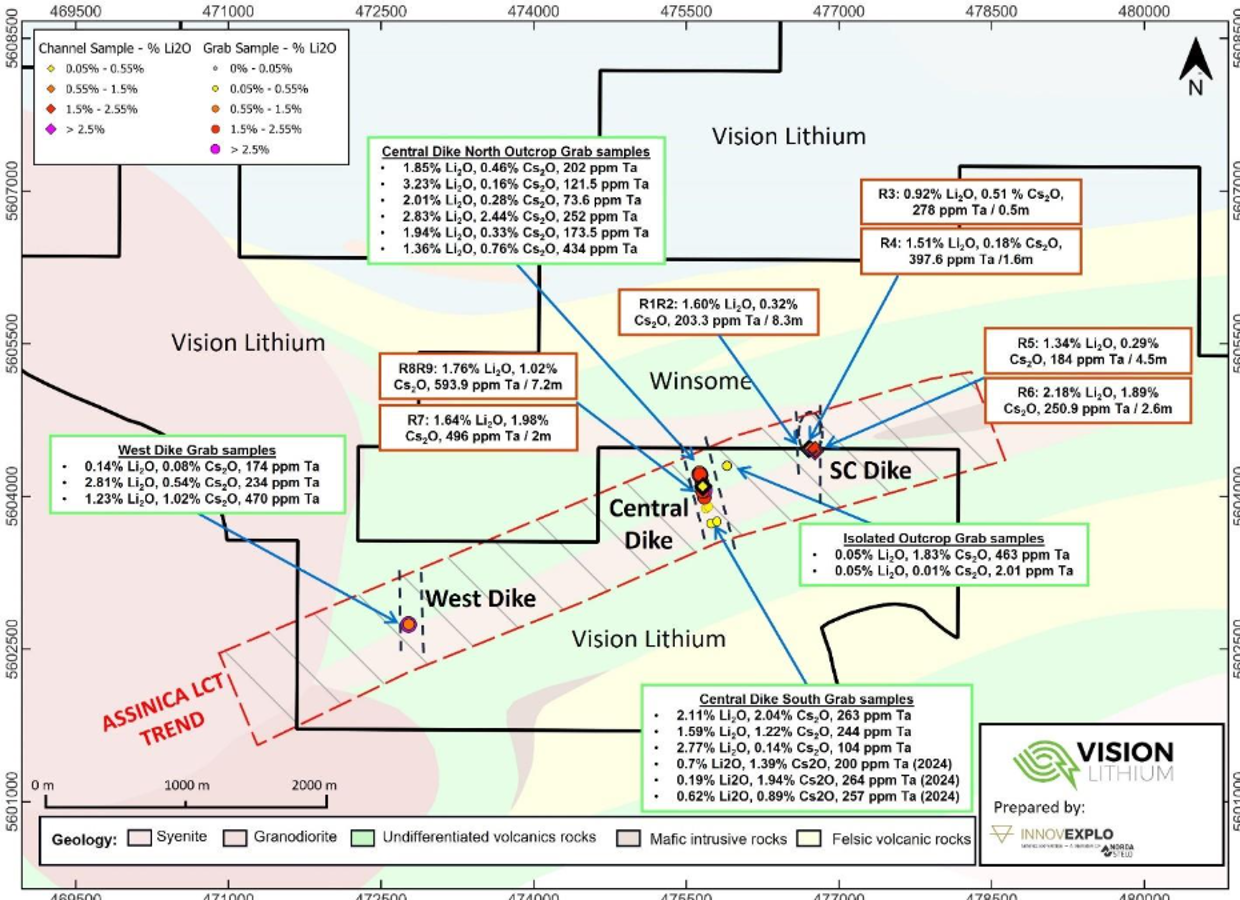
The sub-vertical north-trending dikes are spread out over a 5+ km distance along an apparent east-northeast trend referred to as the “Assinica LCT Trend”. Vision has identified three significant mineralized dikes to date along this trend, each with significant lithium, cesium and tantalum values. Winsome Resources’ SC dike occurrence is in line with this trend where all pegmatites encountered are mineralized. The Winsome SC mineralized pegmatites are located outside the property and are not necessarily indicative of the mineralization on the property. Geologically and structurally, they appear to be part of the same east-northeast LCT pegmatite trend.
SC Dike
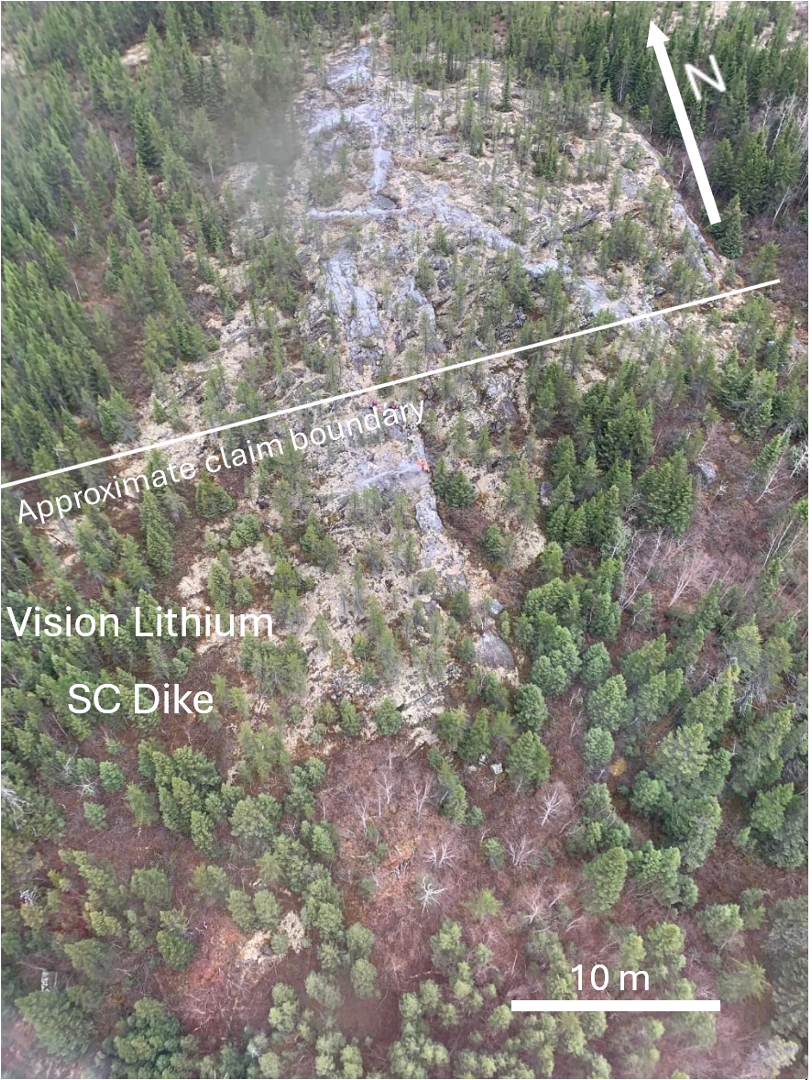
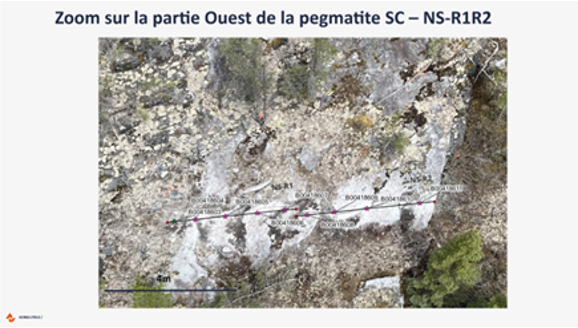
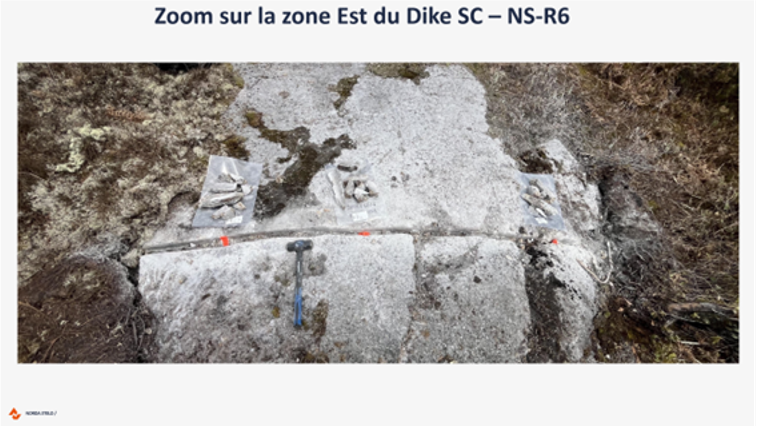
On Vision’s claims, the SC dike is the southern continuation of Winsome’s SC dike where significant widths of LCT mineralization have been reported. The dike can be followed for at least 40 metres south of the boundary before going under overburden, but it likely continues further south. Vision collected six continuous channel samples ranging from 0.5 to 8.3 m, with sample lengths limited by overburden cover.
SC dike (white outcrops) at the Vision Lithium/Winsome Resources claim boundary.
|
Pegmatite |
Channel sample |
Length |
Li2O |
Cs2O |
Ta |
|
SC Dike |
R1+R2 |
8.3 |
1.60 |
0.32 |
203 |
|
SC Dike |
R3 |
0.5 |
0.92 |
0.51 |
278 |
|
SC Dike |
R4 |
1.6 |
1.51 |
0.18 |
398 |
|
SC Dike |
R5 |
4.5 |
1.34 |
0.29 |
184 |
|
SC Dike |
R6 |
2.6 |
2.18 |
1.89 |
251 |
Note: Cs2O% = (Cs ppm/10 000) *1.06; Li2O% = (Li ppm/10 000) *2.153
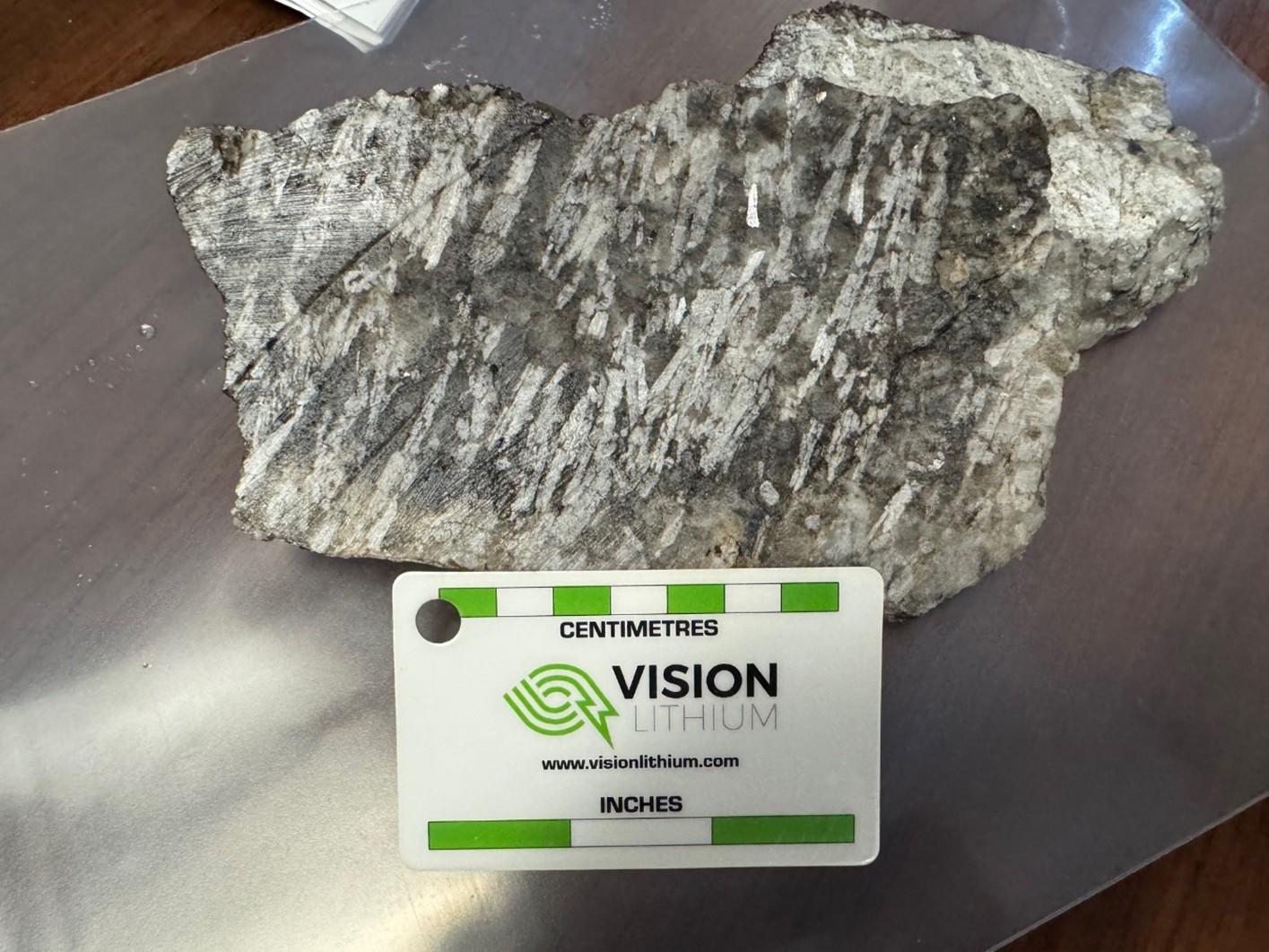
Spodumene crystals from the SC dike.
CENTRAL Dike
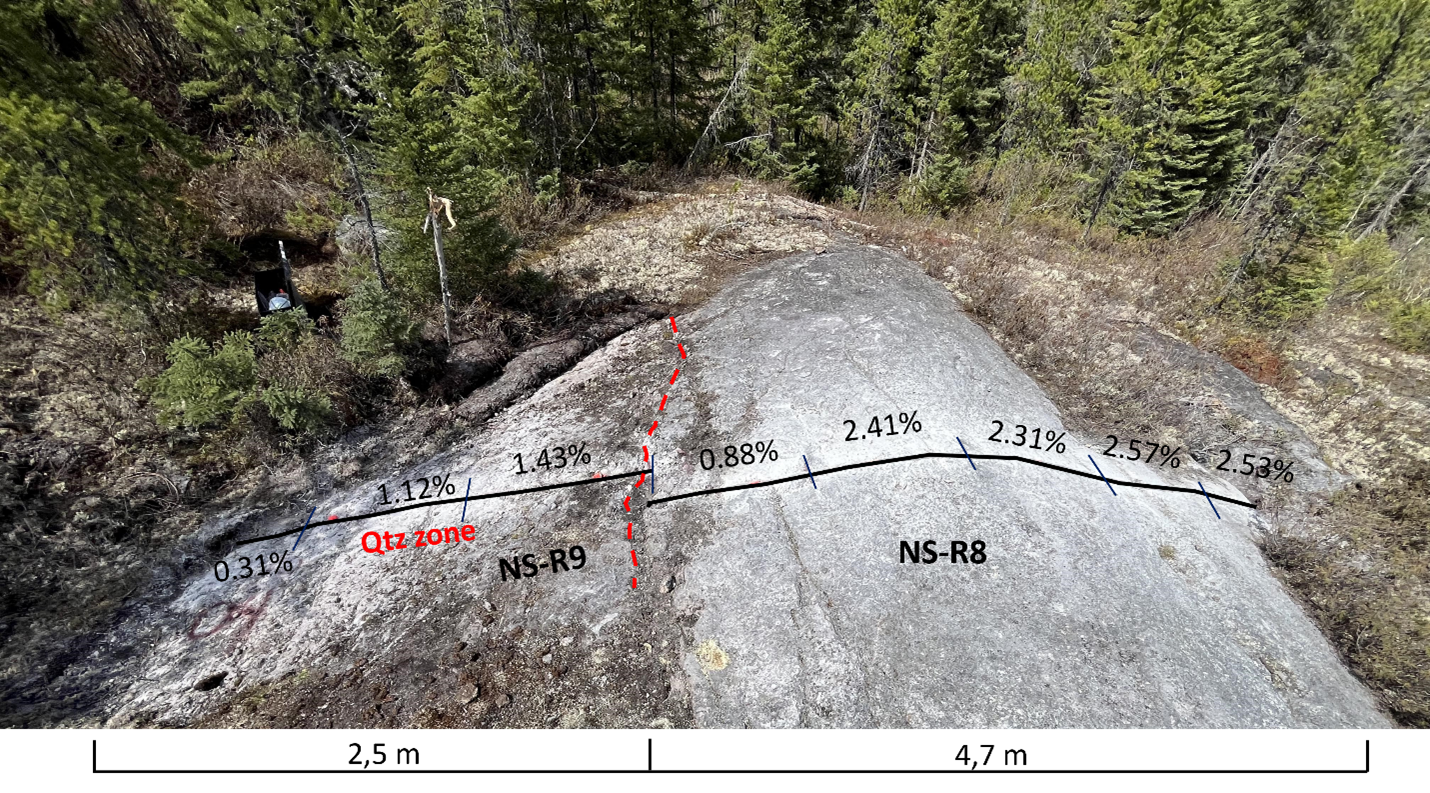
A second LCT pegmatite dike was discovered 1.2 km west of the SC dike by Innovexplo geologists mandated by Vision for this exploration program. This Central dike is the northerly extension of the two narrow dikes discovered last year by Vision which returned high-grade cesium values (see Vision press release November 26, 2024). The new outcrops are well-exposed a few hundred metres north of the original discovery and continue several hundred metres further northward. Overburden covers most of the dike and sampling of the entire dike could not be completed. Vision expects that the dike is likely much larger than what is visible and what has been sampled.
Central Pegmatite and channel sampling cuts with Li2O values.
|
Pegmatite |
Channel |
Length |
Li2O |
Cs2O |
Ta |
|
Central Dike –main outcrop area |
R7 |
2.0 |
1.64 |
1.98 |
496 |
|
Central Dike –main outcrop area |
R8+R9 |
7.2 |
1.76 |
1.02 |
594 |
A number of grab rock samples were collected south of the Central Dike main outcrop area (towards the 2024 discovery) with the following results:
- 2.11% Li2O, 2.04% Cs2O and 263 ppm Ta
- 1.59% Li2O, 1.22% Cs2O and 244 ppm Ta
- 2.77% Li2O, 0.14% Cs2O and 104 ppm Ta
- 0.69% Li2O, 1.39% Cs2O and 201 ppm Ta (2024)
- 0.19% Li2O, 1.94% Cs2O and 264 ppm Ta (2024)
- 0.62% Li2O, 0.89% Cs2O and 257 ppm Ta (2024)
A number of grab rock samples were also taken north of the Central Dike main outcrop with the following results:
- 1.85% Li2O, 0.46% Cs2O and 202 ppm Ta
- 3.23% Li2O, 0.16% Cs2O and 121.5 ppm Ta
- 2.01% Li2O, 0.28% Cs2O and 73.6 ppm Ta
- 2.83% Li2O, 2.44% Cs2O and 252 ppm Ta
- 1.94% Li2O, 0.33% Cs2O and 173.5 ppm Ta
- 1.36% Li2O, 0.76% Cs2O and 434 ppm Ta
WEST Dike
A third significant dike was discovered almost 4 km west of the Central Dike. The new West dike is not well exposed but is clearly several metres wide, north-trending and with a high-angle dip.
The sampling team could only take representative grab rock samples of this LCT occurrence:
- 0.14% Li2O, 0.08% Cs2O and 174 ppm Ta
- 2.81% Li2O, 0.54% Cs2O and 234 ppm Ta
- 1.23% Li2O, 1.02% Cs2O and 470 ppm Ta
Conclusion
The exploration program was coordinated with Innovexplo of Val d’Or, Québec, a member of Norda Stelo. The discoveries leading to the recognition/identification of the Assinica Trend are the result of the exploration proposals and expertise of the Innovexplo team led by Aurélien Eglinger, Ph.D. A whole new corridor/swarm of LCT pegmatite dikes is possible in this area, with potentially economic lithium, cesium and tantalum dikes. Future exploration by Vision will focus on the Assinica Trend to develop its exciting potential.